
The Faithful Steward | Matthew 25:14–30
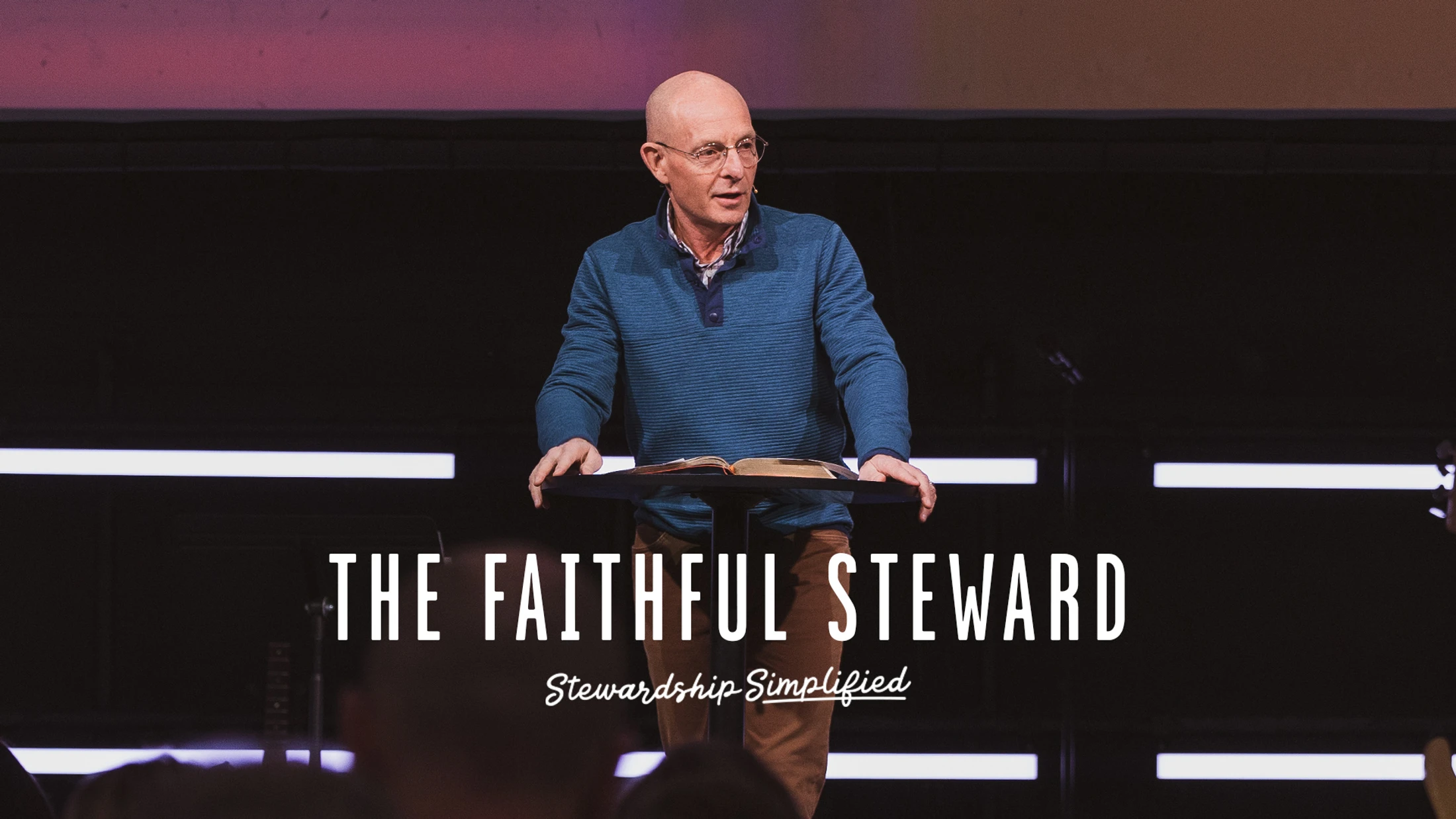
Stewards are faithful managers who invest diligently to see a return. Listen to the first sermon in our 4-week series called "Stewardship Simplified."
Stewardship is about faithfully managing what God has entrusted to us, recognizing that we are accountable to Him for how we care for His gifts. Join us for a four-week journey through the biblical call to stewardship, a responsibility that goes far beyond financing. Let's get under the weight of the word as we begin a four-week series on stewardship, learning how to manage all that God has entrusted to us.
We want to do that over the next four weeks. I think it'll help us. In fact, I think, if I can just be this blatantly honest with you, after watching what this has done in my own life and studying for this for the last several months, I think this could be four weeks that change and deepen our trajectory at First Family.
I think we've only scratched the surface of what God could do through us and in us, and I do long to see more of God's manifest presence. So I'm just praying that this series will be part of what God will use in our lives to see His work further expand. In fact, will you pray this with me? It's the first day of our 21 Days of Prayer and Fasting.
It's the first week of a new series. Here's just a prayer that I've been praying for about two days. Will you join me in this? I'll just simply read it to you.
Pray this in your heart. Maybe say it above a whisper. It's this prayer here, and especially today, as the Word blankets us in these next four weeks.
Pray this, Lord, do anything in me you need to do so that you can do everything through me you want to do. Would you be willing to pray that with me right now? Lord, do anything in me you need to do. So that you can do everything through me you want to do.
And all of God's people said, Amen. Well, it is the first week of a new series. Stewardship Simplified.
And over the next four weeks, I would like to just bring before you a thread that's found in the Bible. It's the thread of stewardship. We're going to look at four various passages, all aimed at this idea of stewardship.
Often we think it's just about money. Some of you have already thought, oh, here comes the annual money series, right? Not at all. It's really about learning how to manage all that God has entrusted to us.
And we're going to see that in four select passages over the next four weeks. Let me, first of all, provide for you a definition of stewardship. You may want to jot this in this delightful handout you were given.
I hope you have one with you. This will help you in your small group. It's fantastically done.
Some great resources on the back. Plenty of space in the middle to take notes, questions to ask in your small group, as well as around your dinner table. You'll get this each week.
Jot this in there, would you? This is a definition of stewardship that I'm most comfortable with. There's probably several out there. Here's one we're going to operate from.
I think it's biblical. It's practical. It's simple.
It's simply, this is the responsibility of managing resources that are not ours, but for which we are accountable. And in this definition, we see that the real understanding of steward in one word is that idea of a manager. Say that with me.
Manager. And so it's this responsibility that has to it accountability, and yet it does not contain ownership. So kind of get your hands around that.
And as you do, perhaps I'll share one humorous incident that occurred in our family as we thought about stewardship. This was probably 15 years ago, give or take a few. Our last born, Brooke, she was in the kitchen with, I think we were all six in there, and we were actually talking about stewardship.
It may have been just one of those first times she had heard the word. I think all the kids were around, we were discussing what it meant to be a manager, and having some fun with that word. And so I think if I recall correctly, we just were going around the room like, hey, what are you managing? What are you managing? And some were saying things like, you know, my game boy.
That's when that was a thing, all right. Or a car, let's say means you think about our resources, or your money, a bank account. And it kind of came to Brooke, and she just was our youngest, and maybe seven, eight-ish in that range, I think.
And she said, I'm managing, and she paused, and she looked around like, oh, you know. Then she looked at herself, and she goes, I'm managing this coat. And we chuckled, and we still chuckle today, because it really, in one way, beautifully defines the attitude of a manager.
Everything we have is a gift from God, even our clothes, what we drive, the house in which we live, the apartment, the money that we earn. All those things really are not ours. They're a gift from God.
And I always think about that story, because Brooke got quickly and early, that even the coat she was wearing, I've got to manage this. And it's funny, but it's a good reminder. That's what stewardship is.
It's managing everything, because it is a gift from God. And here's what we're going to see over the next four weeks. I'm going to just give you kind of a broad overview.
We're going to see that managers then, or stewards, those who are responsible and accountable, but yet don't have ownership, we've got to be four things. We've got to be faithful. We're going to see that today.
We want to be gracious. We're going to see that from 2 Corinthians 8 and 9. There's a generational aspect of this. We're going to see this from Psalm 127.
And then there's a spiritual aspect of this. We're going to see this in 1 Corinthians 4. In fact, on that week, our elders will be up here as a panel for you. And we'll do some teaching and some Q&A on that week as well.
So that's where we're headed. And today we're going to see what it means to be a faithful manager. And to do so, I want to invite you to turn to Matthew chapter 25.
And we're going to look at a parable that's quite well known, but it is startling and gripping. So that's why I encourage you to fasten your seatbelts, because this will only get more intense as we unpack this parable in Matthew 25. It's specifically found in verses 14 to 30.
So put your finger and your eyes on that section. As you do, make sure you have your phone handy, because I suspect you'll have lots of questions. And so I would encourage you to text your questions into the number on your weekly.
And if you have some, I'll probably answer most of them as we work our way through this parable. That's my goal. I had a number of questions as I read it and studied it.
I jotted them down. We're not a lot different. So I'll try to answer them just in the course of teaching and executing the parable.
But if there's some that perhaps I just kind of missed and they're in your head, text those in. I may try to get to one or two this morning in the service, if not for sure on the Extra Point Podcast. All right.
So that's in front of you and before you. With that in mind, let's take a look at this parable, Matthew 25, 14 to 30, which is really all about being a faithful manager. Now, before we even dive into it, I want to answer this question.
Does the placement of this parable tell us anything? Or what does the placement of the parable in Matthew 25, what does it indicate? Because it's placed here towards the end of the book, and it's about being faithful and these servants who receive these talents. What's that tell us about where it's placed? Well, it's interesting because it is placed in Matthew 25. Matthew 25 is combined with Matthew 24 and it provides for us some of the best understanding about the end times that there is in the Bible.
It's the instruction Jesus gave to his disciples about what would happen after he was gone. Now, here's what I believe personally about these two chapters in Matthew 24 from about verses 1 through about verse 35, Jesus tells them what will happen in that generation. I'm going to say to you that probably means to those who are alive in Christ's time and those who are alive up until about 70 AD.
I put a lot of weight into the destruction of the temple in Jerusalem as a pretty big historical marker. I tend to think that what's discussed between verse 1 and 35, or 24 deals with those times. Immediately after Christ's ascension and what occurs in 70 AD in that window.
But what happens in verse 36 of chapter 24 going through the end of 25 deals with what happens after 70 AD up until when Christ returns. That would be us. And it's within that window, 70 AD to whenever Christ returns again, which we don't know when that is.
We're in that timeframe. That's when these parables are shared. And that's when he explains what the kingdom of God is like in that time.
In fact, do you see chapter 25 verse 1? Look at the first three words in the CSB. At that time, the kingdom of heaven will be light. So that time is the time you're living in now.
It's described in Matthew 24, 36 through the end of 25. So the fact that these parables are placed in this place means that they matter greatly. All the Bible does to us, but this is about where you're living now.
And it tells us how we are to live and behave and think and operate. So in light of that, let's look at this parable about the talents. It begins in verse 14.
Follow along with me as I read and just exegete and explain to you. For it is just like a man about to go on a journey. Now let's pause there and realize that the word it, you know the answer to this class, don't you? It refers what? Verse 1, the kingdom of heaven.
So at that time, speaking of the time we're in now, the kingdom of heaven is just like a man about to go on a journey. He called his own servants and entrusted his possessions to them. These possessions included the following, to the one he gave five talents, to another two talents, to another one talent, depending on each one's ability.
And then he went on a journey. So he's establishing here somewhat of a storyline, a metaphor that he's going to be departing soon. And he says that in the story, this man who departs leaves his possessions, his estate, by the way, all of his, can we use the word like belongings? He leaves them to these three servants.
Part of those possessions were these things called talent. So my first question was this, like what is a talent? In our modern world, we hear that we often think of ability, like you can sing, you can write a book, fix a car. That's not what talent means here, okay? And don't let people who preach this kind of get there accidentally.
That's not the point. This is a money financial word. In fact, it's the word for silver.
Now in that culture, talent would refer to an amount of money based on weight. So many have tried to decide how much is a talent worth? That depends on what you're weighing. Are you with me? So if you have a talent of gold, it's going to be worth a lot more than a talent of copper.
In this case, I think the owner had talents of silver. And if you were to calculate it, most commentators would say that he's looking at multiple talents, each one worth about 20 years of wages. That's why I say to you, he's looking at his possessions and his estate, all that he oversees, all that he owns.
It's a lot. He's a pretty wealthy man. And apparently when it comes to his silver or his wages that he's saved, he's got a number of them.
He's got these talents, and he gives five to one, two to another, and one to another. And yes, depending on their ability, that's not a slight or a negative comment on a person's worth. It's just simply an observation upon their ability.
And so there were, in this man's estate, servants, some had greater ability, more, you know, you could say their skill set varied. And so he doled out these talents based on that. And then he went on a journey and the Bible then says in verse 16, that immediately the man who received five talents went, they put them to work and he earned five more.
In the same way, the man with two earned two more. So they took the money, the talents, the silver, and they multiplied them. Now understand that's just one thing you can do with money.
You know, there are only five things you can do with money. That's all. Here they are.
You can earn it honestly, utilize it effectively, give it generously, multiply it faithfully, and enjoy it carefully. We're looking here at the fourth thing you can do with money. You can multiply it faithfully.
That's what these first two servants did. Verse 18 tells us, however, that the man who received one talent went off, dug a hole in the ground and hid his master's money. Interesting, isn't it? I don't know how the first two multiplied their money.
We're not told that in the scriptures. We were just told that they did take quick action, which says to me, the expectation was that they would manage the money. They would multiply the resources.
They weren't just to sit on it. The expectation was they were to get to work quickly, making good use of it. But the third servant, he was not under that impression, apparently, or he was afraid.
He dug a hole and he buried the master's money. This says something to me that I want you to hear really loud and clear without any ambiguity. My sense of the text and a little of this is like innuendos, nuance.
But when I combine this phrase with some other phrases, I'll explain to you later. My sense in this text is this, the third servant was never really in. He got this one talent, but from the very get go, he's so afraid that he hides it.
He buries it. So my sense, and I'm just going to explain this as we go through this, just kind of keep that in my logic. I think he's pretending.
Somehow he's in the, he's in the group of servants. He's called a servant, same word used for the other two. He seems to have access to something about the man's estate.
But if you were to press me in a corner and put a finger on my chest and say, Todd, do you think he was really in? I'd say no. Somehow he was aware of the benefits. He was on the fringe.
He seemed to have access, but he really, he just, he wasn't bought in. There's some kind of artificialness happening with this third servant. Let me show what I mean.
So the long time happens, verse 19 says, and the master then, he comes and he settles accounts with him. Notice the word long. So there's a good bit of time that passes from when he leaves and he comes back.
The man who received five talents approach, presented five more talents. And he said, master, you gave me five talents. See, I've earned five more talents.
And the master says to him, verse 21, well done, good and faithful servant. Circle both words. You were, say it with me.
Faithful over a few things. Second time that word's used. I'll now put you in charge of many things.
Share your master's joy. Key word here in this commendation is the word faithful. So it's textually accurate to say that the key trait, the real thing that stood out about the first servant was he was faithful.
Well, verse 22 says the man with two talents then approached and he said, master, you gave me two talents and see, I've earned two more talents. So both multiplied what they were given initially. And notice they both get the same commendation.
Verse 23, his master says to him, well done, say with me, good and faithful servant. You were, together church, faithful over a few things. I'll put you in charge of many things.
Share your master's joy. Same commendation, different results, but the same action, even though the amount was different. I think that's something you need to log in to this question.
Is the amount something to think about? Is there something going on there? Not really. He just saw different skill sets. He gave different amounts, but there was the same action based on the expectation.
It's important. When you get to verse 24, we begin to see a rise in the intensity of the story. So far, it's like great to read.
The index is going up. Market's doing great. Everyone's loving the result, right? Verse 24, the man who received one talent also approached and he said, master, I know you, which by the way, is a false comment.
He didn't really know him. He thought he knew him. Here's his perception of him.
You're a harsh man. Reaping where you haven't sown and gathering where you haven't scattered seed, which is actually what he did through the first two servants. He left them some talents and they did the work.
They did the labor. They made the connections. He benefited from that.
This third servant saw that as like selfish. As greedy, as harsh, like you go and grab things that you didn't do the work for. That's what he's kind of insinuating.
He's not that way. That's wise investment. That's actually making your, that's working smarter, not just harder.
You've heard that before. But this third servant sees it as very negative and he says, so because I knew that that's how you operated and I see that as harsh, I was afraid. This explains verse 18.
I was afraid and went off and hid your talent in the ground. See, now watch this next phrase. You have what is yours.
This is the next phrase that says to me, I don't think he was really in. Because here's the irony about stewardship. You know it's not yours, but you act like it is.
Could somebody say amen? You treat it like it's your own. Yet you know it's really not. I mean, you're humble.
You don't want to grab. You don't want to try to aim for credit. But the truth is, you know, you're accountable and responsible to give an answer when the master shows up.
So you live like, man, these five talents, these two talents, I got to make good on these things. This third servant never seemed to grasp that. That's why I don't think he was really in.
He was just never really. Is there something artificial and pretentious happening here? Like I'll take the one, but my first action is to hide it. I don't even want it.
It's yours. He almost like says here, here's what's yours. I never really owned it.
I didn't act like it was mine. So you kind of feel the text a little bit. You kind of sense the gravity and the weight with this third servant.
Now, when you read this, one of your questions may be this. Is this third servant giving an accurate description of the master? Because there is some symbolism here that the master is Jesus. He's going away for a long time.
He's leaving his kingdom to those who are in his family. We want to see that advanced, furthered, expanded. So you kind of sense the symbolism happening in the story.
So is he saying Jesus is harsh? And that he just kind of grabs where he can get whatever he wants. That's not at all what's taking place in the text. That is the third servant's perception, but it is not an accurate description of Jesus Christ or of God, the father.
In fact, I would say to you that this man was just doing the typical classic blame shifting. He's making up an account or a character description of the master to excuse his inaction. Let me show what I mean.
He says he knew the man in his mind was harsh and expected returns. And so this made him afraid and he hid it. But if he actually believed that, he would not have hit it.
You know that, right? If he really believed his master expected return was harsh and would call him to account, he would have actually look at verse 26. He says, you're evil, you're lazy. If you knew, indicating you probably didn't really believe this.
You just say this on the spot to save face. You're trying to cover yourself. You don't really believe I'm that way.
Because if you really believe that, if you knew that, he says this, then you should have deposited my money with the bankers and I would have received my money back with interest when I returned. He says this, you could have done the lowest level type of investing. You could have utilized the FDIC to insure your money.
It would have been safe, no problem. And I still would have gotten interest. I mean, you didn't even do the lowest level of diligence.
You buried it in the ground. Nothing happened to what I gave you, which is again, the ambiance is he didn't want it. He didn't really have it.
He's somehow within this group, but he's not really in the group. He's acting totally different than the first two servants. And this is why the master calls him evil and lazy.
Do you see the two counter descriptions? The two counter commendations, good and faithful, evil and lazy. Verse 28 says that the master then says, take the talent from him and give it to the one who has 10 talents. And this is where it gets starkly gripping because the reason he hid the talent was because he was afraid he would lose it.
Guess what happened in the end? He realized he never had it to begin with. You could say he lost it. But the truth is, he holds it up to the master like, hey, here's what's yours to begin with.
Like, I never wanted this. It's almost like financial apostasy in some ways. Here's your money back.
I didn't want it anyway. I never had it. I mean, you just kind of sense like he's not wanting this.
So the story says he takes it and gives it to the man with 10. Look at verse 29. For everyone who has more, more will be given and he will have more than enough.
That's simply a restatement of what he said to both servants in their commendation. When he said, you've been faithful in a few things, I'll put you in charge of many things. That's simply an echo of that statement.
But from the one who does not have, did you catch that phrase? That's the third phrase that lets me know in some way this servant never really had it. I know the text says to us he had a talent and he buried it. But he says, you know, here's what's yours.
This says that from those who don't have, then that'll be taken away. So there's a lot of indication. This guy's playing a game.
He's pretending. And at the end, it's revealed that he's really evil and lazy. Look at verse 30.
And he's good for nothing. I know we don't use those words very much, especially in church. This is a pretty stark parable, isn't it? I mean, that's kind of hillbilly language, isn't it? It's kind of like redneck words.
Like, hey man, you're good for nothing. But here's what the master says about the servant who was playing the part in pretending acting like he wanted the benefits of the return, but didn't want the responsibility of the work. He says evil, lazy, and throw this good for nothing servant, verse 30, into the outer darkness where there will be weeping and gnashing of teeth.
Todd, does that mean this servant went to hell? If you want to use that language, yes. It doesn't mean he lost some ability. It doesn't mean he couldn't use his spiritual gift anymore.
This phrase weeping and gnashing of teeth in outer darkness is a New Testament phrase for separation from God, for hell. Furthermore, this is the same type of language used in the parable before this one of the 10 virgins. When there were five who were ready and there were five who were not, look at verse 12.
He says to those virgins, truly I tell you, I don't know you. Do you go to verse 41 of the next parable, sheep and the goats? He says the goats were not even included. He cast them away.
So the parable language throughout the parables about the coming judgment when Christ returns after the master's gone for a long time is that if you don't make good on the investment, you're not part of the family. You really weren't a servant. It's revealed at the judgment that you've been playing a game the whole time.
You've been close, but you've not really been in. Do you see why this parable is intensely gripping? It's starkly necessary in the time in which we live. Because the master in this case, Jesus, who's sharing this with his disciples is showing what the kingdom of heaven is like at that time in our time now before he comes.
And we're responsible to manage all that he's given us because he owns everything. He's entrusted his possessions to us. If we act like we're doing that, but we know we're really not and we don't want to, we just take it back.
The truth is we're not backslidden. We're lost. We're not born again.
We're not a Christian. This is what the parable is teaching. And the reality based on the parable is this, that there'll be many who will not know that or realize that until the coming judgment.
And you can say, Todd, that's some hard preaching. I didn't know if I came for that. I didn't sign up for this on January 5th.
This sounds like he's just coming straight at us, you know, right out of the gate, you know, guns a-blazing. This is Matthew 7 as well, which was at the beginning of Christ's ministry when he said at the end of his longest recorded sermon, many will say to me in that day, Lord, did we not do all kinds of things in your name? We cast out demons. We saw miracles.
And he'll look at them and say, depart from me, you workers of iniquity. I never knew you. And it is high time for the church to hear the parables of what the kingdom of heaven is like in our time.
It's like a man who goes on a long journey. And when he comes back, he calls to account those who've been entrusted with his estate. And at that time, it's revealed that those who play games with that, buried it, didn't care about it, squandered it and wasted it.
They never really owned it to begin with. I don't mean own in the sense that they realized it wasn't theirs. They just rejected it, refused it.
They didn't want to be a part of it. Because see, here's the irony, I said before, of stewardship. You know, you don't own it, but you live like you do.
These first two servants, they were diligent investors, weren't they? They saw their work with the master's possessions produce a return. Here's what's even more striking too, is this, that we don't know what they did. We know this, they didn't produce the return.
They just made sure they made the investment. And so there's so much here that's instructive. We don't produce it.
God produces it. It does take a long time. All of that's true.
But there is, within our capacity and grasp, the responsibility to invest. And so everything God's given us, it's all his. We live as the responsible ones to manage it well and to invest it and to see that it's multiplied.
And then when he comes, we'll know how all that's happened. Our job is to, on this side of his coming, invest diligently, immediately get to work with all that God's entrusted to us. So that's the parable.
So before I kind of lay out a few closing thoughts and land the plane, let me see if there may be one or two questions that maybe weren't addressed in the exegesis of this. You may have a lot, text me and I can get to them Tuesday. But is there one or two we'll take? We had two in the first service.
They were very difficult. I passed on one. But we'll take these two and see if I get a softball.
I don't know if I will or not. Here's the first question. Does God test us like the master tested his servants? I'm gonna say yes to that.
But God never tempts us, okay? But there are tests that God allows us and provides and even ordains for us, much like he did with Abraham. He took his son up to the Mount Moriah. So there are tests, but I will make sure we stay theologically accurate.
The Bible says God never tempts anyone with evil. So keep these two definitions in mind. God never tempts us.
He's not teasing us. That's not God's character. But he does give us opportunities to prove and to showcase our love and obedience, to refine us, testing refines us.
The book of Job, the life of Job. I think Job even says, when he has tried me, I'll come forth as gold. So these are two words that you need to kind of balance and know the distinction.
But to this question, technically, I'm gonna say yes. There's probably some nuance to that, but I'll give that a yes. Great, I love that first question.
Let's go to number two and cross our fingers here. Why is money used to illustrate this point and reveal the true status of the third servant? Maybe the best answer would be to say this. Money is one of the things that we value.
And so he uses money, not only in this parable, but in other parables as a way to show a contrast between what we value and maybe what God values and how we make our choices. And so money is a thing that's valued in our economy. It was valued in their economy.
In every economy, money is a necessary ingredient. Until you make exchanges, you can use different types of currency, but there's always a currency. There's always an item that shows value on things.
And I think money's here used to show that do you value money or do you value God's kingdom? And how you use money and how you spend it, how you invest it does show where your real priorities lie. Is it helping you lay up treasures in heaven or is just building only something horizontal and earthly? Those are things you need to work through in your mind and think about. But I do think he uses money for that reason.
Remember one time Jesus said that the kingdom of heaven like a treasure in a field and a man finds it and he goes and he sells all he has to buy the whole field. So he sold all that he had because this was more valuable than everything he had. So I think it's designed to bring to the story a sense of value and to cause tension in us in the right way and ask ourselves, what is it that I value? Well, those are the two questions.
We survived them. What do you say we kind of put the car in the garage and make some closing statements and we'll turn the key off in a second. Can we do that? Because I want you to see really some things about this faithful manager that can help us process really what's happening here and then some application.
If I were to put all this in a single sentence, here's what I'd say about this parable. This is our take home truth. It's that faithful managers, remember they're called stewards.
They are those who invest diligently to see a return. That is a faithful manager. So you read this with me all together.
Stewards are faithful managers who invest diligently to see a return. And the underlying words show you the key concepts from the parable, that the real key word here is faithful. Both of the first two servants, this is what they were called twice.
And so the key point is that their ability to invest and pursue and to manage in such a way that multiplication occurred, that's the basis for calling them faithful. Now, listen very carefully. I'll be misinterpreted.
I'll probably be misinterpreted anyway, but let me see if I can get this out without that happening. Listen very carefully. It is this parable that keeps me from trying to divide faithfulness and fruitfulness.
And often people will ask you, and I've been asked this question, would you rather be faithful or fruitful? And they try to pin you between, pin you down to see if you can choose one. Like, hey, you've been on the field for X amount of years and not a lot's happening, but you're going to stay at it. You'll be faithful or do you want to be on the field and see a lot of good results? And I think that's a false choice because nowhere in this text are the servants asked to be faithful or fruitful.
That's not in the parable. Are you with me? Let's take some textual honesty, but have the courage to look in the word and see this, that in this parable, and I would say in other parables and other stories as well, those two are not divided. Jesus never tries to split that baby.
Faithfulness is fruitfulness. Then maybe you don't see it in your lifetime. And we all know we don't produce the fruit.
But we do make the investments. That's our responsibility with all that God has given us and entrusted to us within his kingdom until he returns. Our job is to be diligently investing all that he's given to us so that there is fruit.
And if anyone's thinking I'll be faithful, but I don't want to see fruitfulness, you're not being faithful. Faithfulness is fruitfulness. It's having a mind of investing all that God's given you so that it produces more.
It's a return mindset. It's knowing that it just doesn't stop with you and burying that in the ground. This is what the text tells us.
Faithful managers who invest diligently to see a return. And we don't get to predict that return. We don't cause the return, but it'd be foolish for you to enter into diligent spiritual service and not expect a return at some point.
Let me give you an example of how this is often used to try to divide us. It's typically missionaries who ask me, Todd, would you choose faithfulness or fruitfulness? It's been a long 10 years. It's been a long three years.
Very little fruit where I'm at, but I'm just being faithful. I ask them usually, do you expect to harvest eventually? Do you expect after you're gone, when you're dead, that God could do with those seeds what you can never do while you're alive? They always say, you bet. Then I say, quit asking me to choose between faithfulness and fruitfulness because faithfulness is fruitfulness.
We just don't know when this one will occur. William Carey is a great example. Father of modern missions.
History tells us that for about seven years he labored without a single convert. Now, that may be somewhat hyperbolic. I don't know.
But that is kind of the byline for William Carey. Seven years without a single convert. But today, India, especially Southern India, is substantially Christian because of the work of William Carey.
Now, if you'd have been alive when he was just five years in, you might say, William, you're wasting your time. Or maybe you would have said, don't worry if there's no fruit, just be faithful. I think both of those are terrible responses.
We say, William, keep laboring, keep sowing, keep investing, keep diligently serving with a view to the harvest that God will give in his time. You can expect fruitfulness. Fruitfulness from your faithfulness.
Our job is to invest diligently, to work, to serve with confidence and faith that God will give the increase. Remember what Paul said? Some plant and some water, but God gives the increase. Let's be sure we plant and water.
Amen, church? Let's don't bury it in the ground and be done with it, act like we don't want it. Now, if you're struggling with the fact that this third servant was a servant, seemed to be in, and yet that was taken away, or this moment of revelation indicated he never really was in, like that's like, does that mean we lose our salvation? Not at all. We're not talking about salvation losing it, we're talking about never even having it, but pretending like you do.
Kind of going through the motions, playing the game. It's very similar to the debate James has when he says there's faith and then there's works. And he says this, church with all ears hear this, James says faith without works is dead.
The servant, the third servant may have thought, I got faith, but the truth is he didn't. He had dead faith, which is no faith. Faith always results in time, in work.
The seed of God always produces at some point fruit, Matthew 13. So this is why I land where I land on the parable. It is about two servants who through diligent investing proved they were in.
And their mindset was we got to make sure that while the master's gone, then we're living like this belongs to us, but we know it doesn't, and we're going to just invest and work. We're going to see God's kingdom expand. We'll go to whatever length we need to, pay whatever cost to see the master's possessions be multiplied.
And there's that third servant who was hands off. I don't want it, but I want to kind of act like I do. And to be frank with you, that's the kingdom of God at this time.
It's got both wheat and tares. Jesus said when you come to a field and you see both wheat and tares, don't try to go pick out the tares because you might disrupt the wheat. He says, let them grow together until I come.
It's a startling, a startling moment of teaching for Christ. It gives me great comfort in the middle of sometimes watching churches like, man, are you guys even born again? You got a mixture of all kinds of people. That's the church.
That's the kingdom of heaven right now. There are those who are pretending. There are those who are legit.
One of the ways we test ourselves is to ask, am I diligently investing what's been entrusted to me so that it sees a return for God's kingdom for the master? Is that how you're living your life? Are you laying up treasures in heaven? Are you storing up for yourselves rewards and seeing the kingdom of God maximized? Are you leaning your job and your hobbies and your income or all those things that you manage, are you leaning them against the wall of God's purposes? That's the question to ask to find out, am I really a servant? Am I really in or am I just pretending? So before I give you just a few application points, that's the car we've parked in the garage. And I think all of us should think long and hard about it. Are you servant one or servant two or are you servant three? The test is what are you doing with what God has entrusted to you? Do you live like you own it when you know you don't and you're making good use of it, multiplying it, seeing returns on it, fantastic.
Or do you live like I like some of the benefit but I don't want to touch it. Too much responsibility, too much expectation. I'm just going to bury it when he's returned, I'll just give it back to him.
You don't even have it. Pretty gripping parable, wouldn't you say? So let me close by just giving you some quick application because maybe you're thinking, Todd, I'm in one or two, I mean, I'm a servant one or two somehow. I mean, I really want to invest and see God multiply what I have.
What can I invest and how can I invest it? What could I do with this? Well, the first thing I'd say is this. Give your life to God. So this is going to be to the third servant.
I'll hold the first two up here for a minute. To the third servant, quit pretending and playing the game and get in the game, get on the team for real. Trust Christ.
Come up under the master. Accept the gift he's given you responsibly, responsibly, enthusiastically, and then invest it. Live with that in mind.
Don't bury it. Don't pretend to shy away from it. Don't try to ignore it.
In other words, believe on the Lord Jesus Christ. Become a Christian. Trust Christ to save you and actually legitimately, authentically be born again.
That's the way to give your life to God. That's the way to invest your life. Quit pretending and profess faith legitimately in Jesus.
Now, once you're on the team, once we're all together, we're servants one and two. We're kind of managing his kingdom until he returns and consummates it. Here's a few of the things you can do to invest and ways to invest it.
Maybe you're thinking, Todd, how can I invest my money? Well, here's one practical way. Give to and through your church. And you may be thinking, well, of course you're going to say that, Todd.
You're the pastor of this church. Well, that is true. I should say that, right? But I also want you to hear this.
Churches that cooperate together and give collectively really hold a lot of power to making massive difference across the world. In fact, I'd suggest to you that often it's much greater than just what one person can do or one organization alone can do. So we're part of a group like that.
We're part of what I call the cooperative program. We participate monthly by giving a rather small gift, to be frank with you, to a group that houses 47,000 churches. We give to that fund.
It is that fund that's distributed and then helps 3,500 international missionaries. It funds them. They don't raise support.
They don't go from church to church. They don't send out letters asking for your money in addition to your tithe and offering. They're automatically supported in a career fashion as a missionary because of the cooperative program.
Because of 47,000 churches who give what they can, it combines to fund 3,500 international missions. That's not counting the work in North America. Now watch this.
Those 3,500 missionaries have a little more than 2,000 children as well. So here's the raw facts. Over 5,500 individuals live internationally for the kingdom because of a gift that you give every month from First Family that's combined with 47 other gifts.
That's a lot of power in one gift, isn't it? So if you're wondering, Todd, can my money be multiplied and can it see dividends through First Family? Oh, 100%, just in that way, not counting the other ways that money here is spent and invested and we see spiritual dividends. So I wanna encourage you, continue to give to partners, continue to give to charitable organizations. I'm not against any of that, but by all means, prioritize your giving to and through your local church.
It's a fantastic way to see talents multiplied, to use the parable language. Some have asked, well, Todd, how much should I give? It's a good question. Some hold that 10% is required.
Others would say that we have to be sacrificial in our giving, maybe more the New Testament language. I would land there. I don't think it's a sin to hold to a 10% required view.
I think that's fantastic. Those folks are usually very good givers, by the way. So we can debate that.
I don't wanna make that a divisive point. I'm saying this to you, that the question is the amount you give should be a sacrificial amount, and I tend to think 10% is a good place to start. That's where we started when we were first married, 10%.
And then ask, how can I continue to live on less and give more? That'd be a great spiritual posture to take. And so just keep that in mind. Some of you are thinking, man, Todd, I'm only giving 1% or 2%.
Well, just try to increase that. And I would say to you, 10%, if you were there, that'd be a great place to experience sacrificial giving. In fact, what you're thinking right now in your head about me is an indication you'd consider that sacrificial.
You're like, you want me to give how much? That's a huge sacrifice, Todd. There you go. You get there, that'd be sacrificial giving in the New Testament.
That's what we're called to do, is to give sacrificially for God's kingdom. So I would encourage you, aim for 10%. I think it's a great place to start and see what God could do going forward in that.
That's a way to invest your money practically and to see it really return great spiritual dividends. Some have asked about time. How do I invest time? I would encourage you to value spiritual disciplines.
Now we're in a series right now, three-week series on prayer and fasting. Those are two spiritual disciplines. They're called spiritual disciplines because what they do is, they do something in your life over a long period of time, if you engage in them, that you couldn't accomplish in a short amount of time.
That's what a discipline does, whether it's saving money or on a diet. A discipline is something you do in a small way every day that enables you to do something in a big way one day. So embrace that principle spiritually and just read the word of God every day.
Pray to your father every day. You'll be surprised if you just read the Bible some every day over one year, two years, five years, how much of the Bible you'll be able to read. But you couldn't just read all that in one day, but over a lot of days in little chunks, you can.
Fasting is the same way. So I just want to encourage you, if you want to see your time experience, the dividend effect, multiplying it, investing it so that it shows a return, invest in spiritual disciplines. Some of you wonder, how can I invest in my knowledge or my possessions? I would say, share them.
Whether it means giving stuff away or teaching a class, leading a small group, hint, hint. These are all things you can do to give away what you've learned, what you're learning, what you have. Again, it's seeing things multiplied.
It's going from just sitting in your brain, now it's sitting in three brains. It's not just in your heart, it's in four hearts. But it's taking that step to disseminate that information.
So write, share, speak. If it's your stuff, man, be careful it doesn't grab your soul. Learn to give it away, share it.
I love to share books. I've learned to put my name in the book because usually if you give a book, if you loan a book, you've given it away, unless you've got your name in it, right? But instead of just hunkering down saying you can't borrow books, I just say, hey, yeah, you can borrow a book and try to share. Just all kinds of ways you can help things multiply by sharing, whether it's your knowledge or possessions.
Last thing is this. How about people, Todd? I want to invest in people. Here's the best advice, just disciple someone.
That's what Matthew 28 calls us to do, to make disciples of all nations. So just accept the responsibility to reproduce yourself in someone else. Now that's a magnanimous call.
Most folks hear that and say, I don't know what to do. I'm going to give you a great starting point. I'm speaking to those who have every intention to obey, love Jesus.
They're on board the sending culture. They know this is the call of the church to multiply. You're not debating that you're in, but it's just hard.
You're not sure what to do next. Here's my advice. Ask God to lead you to someone.
And when you get a name, then approach that person, ask them this. Hey, could we meet for three or four weeks and see how it goes? You can do that for three or four weeks. I know you can.
And just share what you've been learning. Or just say, can we get together and read the Bible? I'll read a verse, you read a verse. I'll read a verse, you read a verse.
We'll do this just three weeks, four weeks, see how it goes. We'll both evaluate and we'll see if we're growing, if we're gelling, if it's working. And either one of us can take an out or we can say, let's try another month.
I think that approach allows you to kind of step into the water, you know, zero injury level, six inches, two feet. But here's what it also does. I would say that after two or three months, and you can give or take this time frame, but I'm just going to go with two or three months.
Say to the person, hey, I tell you what, after the next four weeks, let's find someone else. And suddenly you've gone from one to two to four without being inhospitable, without being mean. And sometimes the reason we don't commit to discipling people is because we feel like we're signing up for a 10-year journey in Leviticus, right? Like, am I meeting them for coffee for the next 20 years? I'm not sure I even like them yet.
And those are all human reactions, you know. So I suggest just ask the person, hey, I feel like God's put you on my heart. Can we meet three or four weeks and see how it goes? With an option to get out with no hard feelings.
If it goes well, we'll stay. But at some point, we'll stop so that you can do the same thing with someone else and I can do it with someone else as well. What if all of us just tried that for the next year or so? I think discipleship or discipling becomes simple in some ways.
Just it's not this magnanimous, overwhelming task. So if you want to invest in people, that's one simple way to start. Just disciple them.
You'll get better at it. But what you'll find is you'll be seeing returns and dividends. You'll have a multiplying mindset.
You'll be diligently investing what God's entrusted to you with your time, your knowledge, your possessions, your money, your whole life. That's proof, proof positive that when he does come, when the master comes back from the long journey, you'll get these words, well done, good and faithful. Servant, you've been faithful over a few things.
I'm going to put you in charge in many things. Share your master's joy. Who doesn't want to hear that? What I don't want to hear is evil, lazy, good for nothing.
So church, for the joy of Christ and for the good of his kingdom until he comes to consummate it, can we diligently invest what he's left to us so that it sees a return that lasts for eternity?