
The Real Reason We Don't Witness
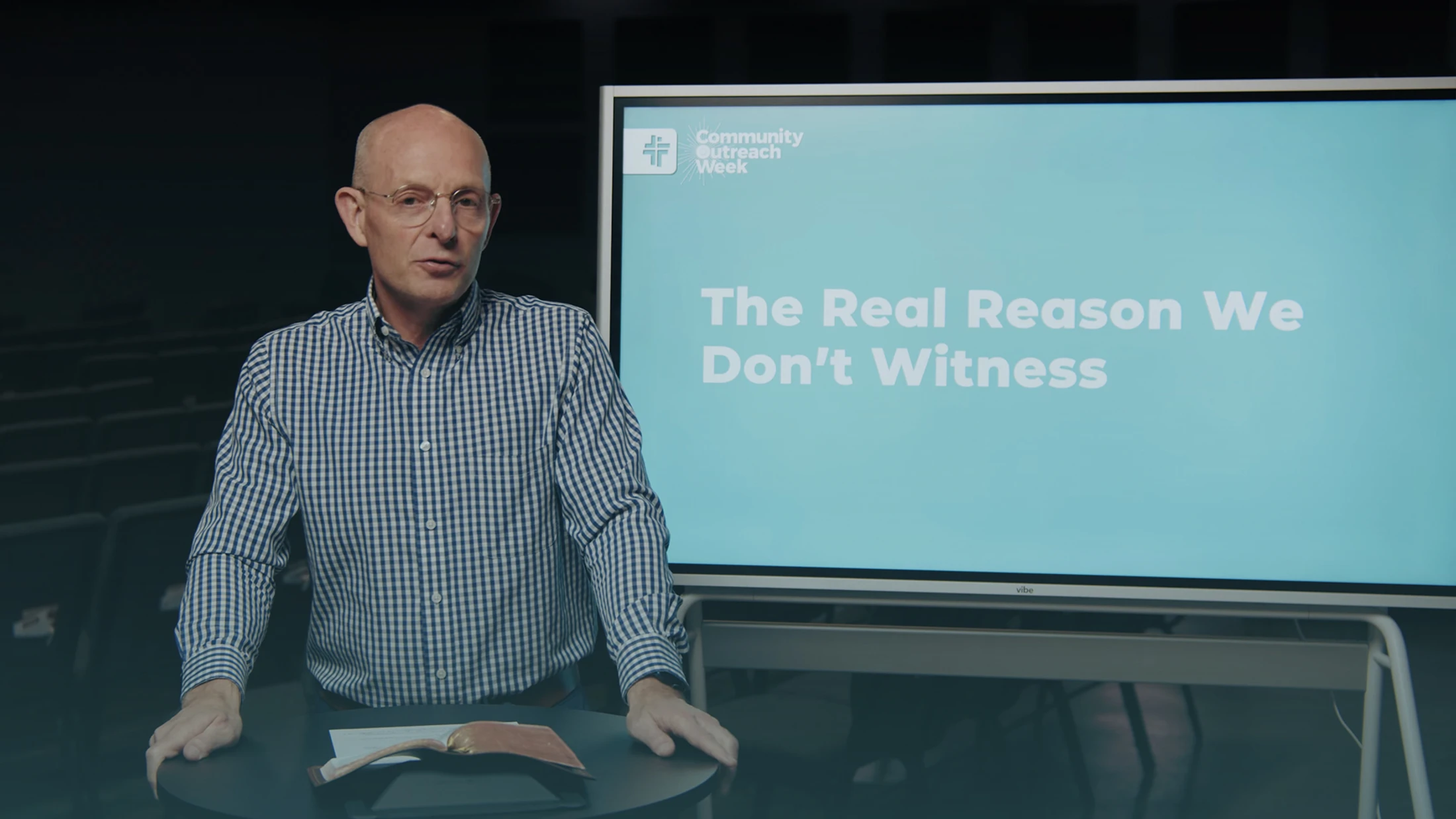

Listen to this bonus CO Week message and learn more at firstfamily.church/co-week.
Thanks for joining me this week for an extra message, a little bonus opportunity here. We are in the middle of Community Outreach Week, we're calling it Co-Week, and we're focused on local evangelism, sharing Christ, and I want to talk about a subject just for a few extra moments that I think a lot of us wonder about, often we give excuses about, it would be revolving around this topic, the real reason we don't witness. You know, sometimes we hear this question, why don't I really witness? And we give what we'd call reasons, we say I've not had enough training, or I'm not really cut out to be a people person, or I'm not really good at certain elements of it, I don't know enough.
Can I be frank with you here, and can I invade your space for a moment? I think those are probably just excuses, that's true for me, it's true for you. There's actually a root level reason that we don't witness, and it's hard to hear, it can be quite convicting, but I do think Acts 17 shows us the real reason that we don't witness. Now I want to go to our lab again in this extra message, in this bonus opportunity, and I want to show you from a single verse what I believe is the reason that we don't witness.
It's in verse 16, what follows of course this verse is Paul's sharing of the gospel at Mars Hill. It's a very intriguing narrative, but notice this beginning verse that shows us what prompted all of Paul's action. Let me read it for you first, Acts 17 16, while Paul was waiting for them in Athens, he was deeply distressed when he saw that the city was full of idols.
I've always loved this verse, because I think it gives us really the the real reason that Paul witnessed, which if you think about the implication would show us the real reason that we don't witness. Notice a couple of phrases. The Bible says he was deeply distressed.
The ESV would translate this, he was provoked in his spirit. It speaks of an internal kind of irritation. Maybe you just want to jot down the word irritation somewhere, maybe in your journal or on your notes.
Paul had, we could even say spiritual trauma. Now the question is, why did he have this internal irritation? Why was he deeply distressed? Why was he provoked in his spirit? The next phrase is intriguing as well, he saw that the city was full of idols. He would say this, and I would say this, the idolatry is really what caused his irritation.
The amount of pagan worship, notice the word here in the text, full. So there is a high level of saturation that Paul's seeing, and it provokes an internal distressing moment for him. So idolatry in the city, Paul's seeing it, it's visible, provokes him internally, spiritually, and what does he do? Verse 17 says, so, and what begins to unfold is the Mars Hill encounter.
But the word so, which starts verse 17, is the word of consequence. It's a word of action. So Paul did something, and it's because of this right here.
He saw something, and then he said something. Paul was realizing that there was way too much worship of the wrong gods. It bothered him spiritually, internally, and so he took action to proclaim the only true God.
Now what do I learn from this? Well, just be aware, church, this simple verse, I believe, shows us why we don't witness. It's because we're not really broken for our city. We don't see our city the way Paul saw that city.
As a result, we really don't experience any kind of internal irritation, a provocation in our spirit. We've become familiar. We've become at ease.
In all frankness, we've become at home to the point that we don't see all the pagan worship from those who don't know God. It doesn't bother us like it should, but here's what I'm learning. Here's what I admit to you.
Here's the real reason I don't witness, and probably the real reason you don't witness. You know what it is? That we're not broken for our city. Because I believe this, and I believe it based on Acts 17 and 16.
When you're broken for your city, you'll witness to your city. Admittedly, there are ways to do that. There are times to do it.
There are moments and methods we can use to do that better. So I'm not denying that we can increase in our effectiveness, and we can be aware of timing. Yes to all of that, but the desire to even start, to begin, to attempt, sometimes seems absent from way too many Christians.
It's like we're not really believing hell exists. And see, watch this. This is the end result of those who are broken, who are away from God and worshiping wrong gods.
Hell, eternal separation from God, awaits those who don't worship Him. So do we really believe hell exists? Do we really believe that not worshiping God and worshiping false gods, that idolatry separates us from God forever, unbelief sends us to hell? Do we really believe that? I suggest to you, I want to pastorally plead with you. When we believe that deeply, theologically and practically, we will begin more quickly to share, to cross the threshold of awkwardness, even maybe embarrassment or pain, to talk to people about the one true God.
Because we'll begin to be more broken for our city and we will in turn begin to witness to our city. So can I just bring you into my boat for a bit? Can we row this together? Let's be honest with each other. I ask permission to invade your space.
Well I'm doing that in my life and yours and I think if we're honest with each other, we'd say the real reason I don't witness is because I'm not truly broken for my city. I've become familiar, calloused, at home to the degree that it doesn't bother me, that perhaps though I might say I believe that hell is the destination of those who don't worship God, my actions don't show it. And I'm praying for you and for me that especially during Co-Week, this weekend which we're focused on those closest to us at home, I'm praying that we will live out what we say we believe.
That Jesus Christ is the only way to be reconciled to God. That for those who don't believe and don't worship him, hell is their final destination and we have the good news of rescue from that. Is that Jesus Christ lived, died, was buried, and rose again.
It's the gospel. May that be quick on our lips. May that be ever present in our life, especially when we're with and near and around those in our city who are far from God.
And as we see the brokenness in our city, may we be ready to share with our city, to witness to our city. This is the aim, the reason that we are living in this city and present here. I'm praying for you.
I'm praying for me that we'll be more quick than ever to do exactly this. Witness to our city by the good news of Christ and his gospel.