
The Red Sea and the Real World (Part 1) | Exodus 15:1–27
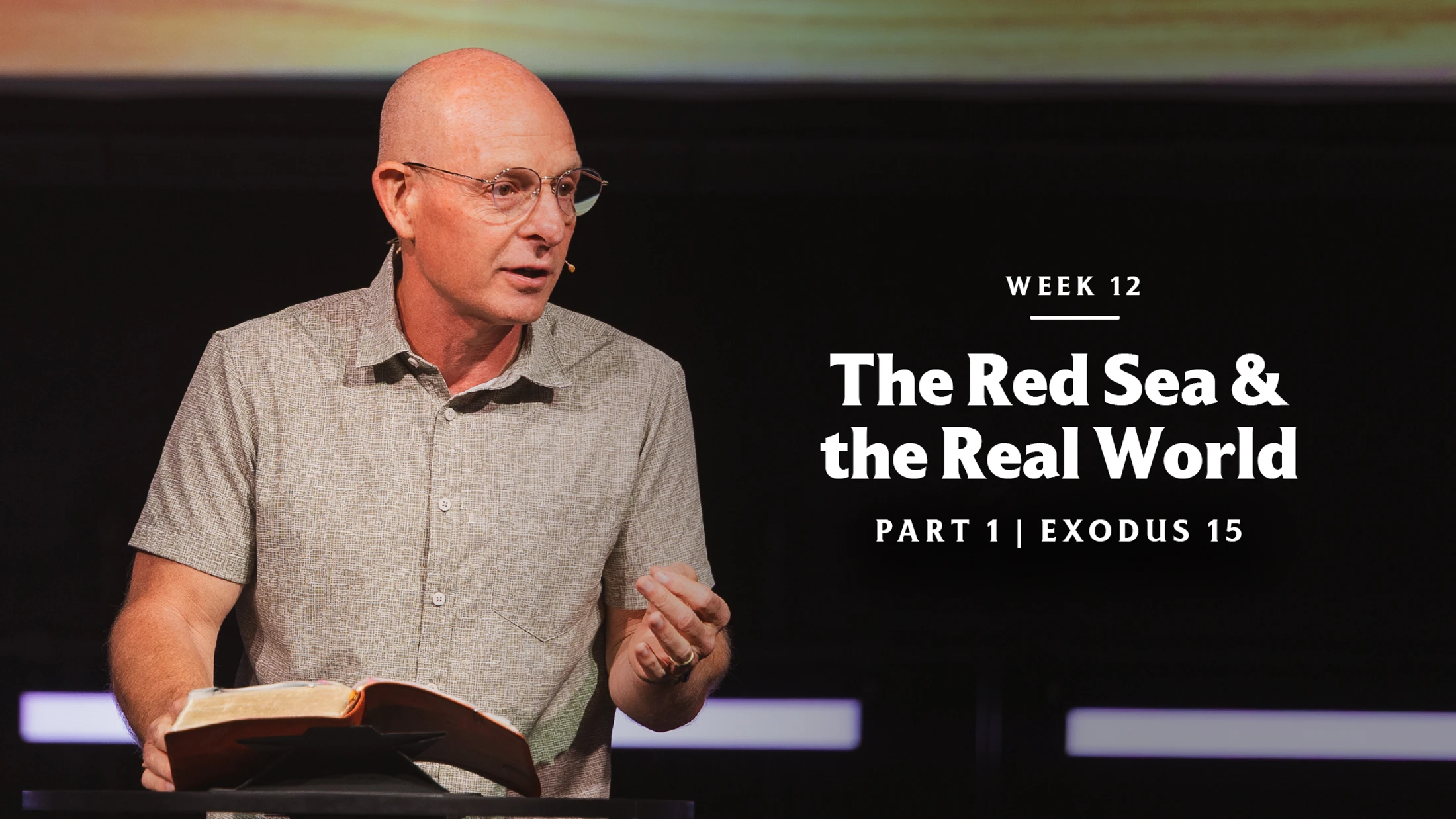
The God who brought them out in power walked with them in patience.
The God who brings you out in power walks with you in patience.
Listen to week 12 of our series in the book of Exodus. Learn more about the series here: https://firstfamily.church/exodus
Exodus tells the story of a God who isn't distant, but moves toward his people in power and mercy. God reveals himself as I Am, leading Israel out of slavery and into the life-changing reality of his presence. Have your series guide, your Bibles handy.
Can we do that? And let's get under the weight of the word on this Sunday and watch God through his Holy Spirit and his Holy Word accomplish much in our presence as he is doing already. I have a question for you. How many of you would say you've experienced a mountaintop moment and within days were walking through a valley? I'm not going to describe those.
That's your opportunity to fill the blanks in. But in some way in your life, there was a moment of great worship. And then in just a few hours or days, you found yourself in a wilderness.
If you'd say, yeah, I can relate to that. Just kind of wink at me, nod at me, wave a hand, say, yeah, we're with you. Right? Say, come on, pastor.
Right? You can say something like that. I've had those. I think that's one of the ways that I know that we are just so much alike.
There's moments you just preach boldly and felt empowered by the Spirit. What we all call in our circles like a sense of unction in the moment. And then Monday or Tuesday, your wife saying, is this the same guy that was preaching last week? Your kids would say, hey, what's up with you? That doesn't sound like the same guy.
And you kind of have these almost like Jekyll and Hyde moments, perhaps, or at least temptations towards Jekyll and Hyde experiences. High moments of worship, low moments in the wilderness. What we might say are Sunday saints and Monday ain'ts.
Perhaps you're thinking spiritually, yeah, I've had Super Bowl Sundays and training camp Tuesdays. Word it how you want to. I think you're getting the drift, right? That often the human experience, and I would say they're both sincere.
I don't think often they're pretentious or hypocritical. I think we honestly have legitimate mountaintop moments. And then in just hours or days, we have legitimate valleys.
And so we have to wrestle with this human experience that has twists and turns and highs and lows, and no one's exempt. The platform doesn't have me exempt from that. The chair doesn't make you exempt from that.
It's something that all of us wrestle with. I find it amazing how quickly my heart can go from, man, who is like the Lord to like, where did the Lord go? And if I'm honest with you, and I am, the difference between a mountaintop and a valley, the distance between a worship moment and a wilderness wandering is sometimes just 18 hours. It's from Sunday to Monday.
You've experienced that, haven't you? Well, you and I, we're not the first. This is exactly what Exodus 15 is all about. It's about their Red Sea moment, Exodus 14, and then the song they sing in response to it, and then the real life moment of complaining in the wilderness.
They went from the heights of seeing God's work to the lows of grumbling about their situation. It sounds very relevant, doesn't it? Let's read about it. It's Exodus chapter 15.
Your Bibles are open there, your series guide, all of our locations, every campus. Let's get under the weight of this chapter, and let's learn about the Red Sea in the real world, shall we? Chapter 15, the first 21 verses, they really are all about the song of worship that erupted from Israel in response to the miracle of the Red Sea that God performed in that moment destroying their enemies. Verses 22 through about 27 are then the next event, and they're just days apart.
Now in the first 21 verses, like I said, it's a song. I would remind you that this song has a choir section. That's about one through 18, then it has a solo by Miriam at the end, and tucked between those two is a narrative recap that prompted both.
So we'll just read this. I think it'll make sense to you, but notice we're going to read first of all about the song of worship, and then we're going to hear the cries of whining. So let's start in verse 1, then Moses and the Israelites sang this song to the Lord.
They said, I will sing to the Lord for he's highly exalted. He has thrown the horse and his rider into the sea. The Lord is my strength and my song.
He's become my salvation. This is my God. I will praise him.
My Father's God. I will exalt him. The Lord is a warrior.
The Lord is his name. And what did this warrior do? Verse 4, he threw Pharaoh's chariots and his army into the sea. The elite of his officers were drowned in the Red Sea.
The floods covered them. They sank to the depths like a stone. Lord, your right hand is glorious in power.
Would you circle the word power? Put a square around it and star it. Lord, your right hand shattered the enemy. You overthrew your adversaries by your great majesty.
You unleashed your burning wrath. It consumed them like stubble. The water heaped up at the blast from your nostrils.
The currents stood firm like a dam. The watery depths congealed in the heart of the sea. Those are all exhibitions of what I had you circle of God's power.
Verse 9, the enemy said, I'll pursue, I'll overtake, I'll divide the spoil. My desire will be gratified at their expense. Here's someone trying to resist God's power.
The enemy further says, I will draw my sword. My hand will destroy them. Verse 10, first word, say it with me, but, watch this, you blew with your breath and the sea covered them.
They sank like lead in the mighty waters. And so verse 11 is a natural conclusion. Lord, who is like you among the gods? No doubt referencing the Egyptian pantheon with all of its gods that they worshiped on a regular basis, which were dismantled in every one of the 10 plagues.
This is a natural conclusion in a rhetorical form. Lord, who's like you among the gods? The answer is no one. Who's like you? Glorious and holiness, revered with praises, performing wonders.
The answer, no one. You stretched out your right hand, the earth swallowed them with your faithful love. You will lead the people you have redeemed.
You will guide them to your holy dwelling with your strength. When the people's here, they will shudder. Anguish will seize the inhabitants of Philistia.
Then the chiefs of Eden will be terrified. Trembling will seize the leaders of Moab. All the inhabitants of Canaan will panic.
Terror and dread will fall on them. They will be still as a stone because of your powerful arm. Would you circle that word powerful, put a square around it, put a star near it? He's speaking here now about what will happen in the future when people hear about God's power exhibited at the Red Sea moment.
He says this will occur because of your powerful arm until your people pass by, Lord, until the people whom you purchased pass by. You will bring them in and plant them on the mountain of your possession. Lord, you have prepared the place of your dwelling.
Lord, your hands have established the sanctuary. The Lord will reign forever and ever. Can you just envision a choir singing that fantastic? What a beautiful, beautiful tribute to the event described now in verse 19.
Here's the narrative recap. When Pharaoh's horses with his chariots and horsemen went into the sea, the Lord brought the water of the sea back over them. But the Israelites walked through the sea on dry ground.
That event is what brought about verses 1 through 18, this song of Moses and the Israelites. It also brought about a very short solo for Miriam. This is what verse 20 says that the prophetess Miriam, Aaron's sister, took a tambourine in her hand and all the women came out following her with tambourines and dancing, almost like a response now to this great song.
They're just joyful, visibly, verbally. They're doing far more than raising their hands. Hallelujah.
Amen. And Miriam sang this very short solo, sing to the Lord for he is highly exalted. He has thrown the horse and its rider into the sea.
And her solo, in essence, just repeats the very first stanza of the choir section. You can go back and see that. So beautiful song by the choir, by the soloist, remembering and celebrating.
It's a moment of worship about God's work at the Red Sea. Now I'm going to submit to you what I think is the primary and dominant theme of this song because we could look at various attributes of God mentioned in this song and we could spend a month or more just analyzing those and chewing on those, meditating on those, and it would be very spiritually rewarding. This morning I just want to show you what I think is the dominant theme, and it's the simple truth and attribute of God's power.
Now not only can I say that to you and contend for that because of the word, it's used twice, but I think various elements in this song point to the attribute of God's power being the dominant theme of the song. Can I share those with you? Let me mention about four things. First of all, I think the nouns in this song point to God's power, primarily the noun given as the name to the Lord.
You'll notice this in verse three. The Lord is a warrior. Say it with me, warrior.
Warriors are powerful. They're conquerors. They defeat enemies.
They're strong. The word strength is mentioned twice in this psalm, and so I think the idea of warrior really throws a strong hint to us that the song is about the power of God as our warrior. I also think the verbs point to it.
Now there are a boatload of verbs in this song, okay? I won't mention all of them, but I'll just mention a few of them, and notice how these are all actions done by someone who's very powerful. These aren't lightweight verbs here. For instance, verses one and 21, thrown.
Verse four, through. And also the word drowned. In verse six, shattered.
In verse nine, destroy. Verse 12, swallowed. And so far we've seen words of completion.
They're words that are superlative words. These aren't comparative words. These are words of complete action.
Verse 15, terrified and trembling. And then verse 18, reign. So when you reign, you're king.
You're top of the line. There's no one like you. You are in sovereign, complete control.
In other words, you're powerful. You are the most powerful. So I think the verbs really point to God's power.
I also think the metaphors point to God's power. This is probably my favorite nugget in the song. Now I could mention the very easy to understand metaphors of the right hand.
It's mentioned twice, verse six and verse 12. In Old Testament language, the right hand stood for authority and power. If you were at someone's right hand, then you were there seated as the one who's in charge or you were given authority.
So here when he says, your right hand did this or your right hand accomplished that, he's simply speaking of God's authority and power. You see this in verse 18, the metaphor of a king with the use of the word reign. But I think my two favorite metaphors both involve the nose, kind of fitting for a pastor with a big nose, right? In verse eight, notice the phrase, a blast from your nostrils.
Moses writes this song and he says, this is what caused the seas to come up to a heap. In other words, when the Israelites crossed, the water stood up like walls. They were just massive heaps and the ground was immediately dry and this is how they walked through.
And that would take an incredible amount of engineering and work on mankind's part to even accomplish that. What did it take for God to do that? I won't imitate it, but just a blast from his nostrils. Now, we discussed this phrase earlier in Exodus during the plagues.
It's not just a blast from your nostrils as air. It really indicates a posture where there's righteous anger and indignation over evil. And so the mind thinks about a bull kind of, you know, snorting before he charges.
The point here is the metaphors that it didn't take much for God to do what man could never do. That's power. It's further accented by the next use of the word breath.
Notice this. It's in verse 10 when he says that, and this is in response to all these enemies who are making these grandiose statements about all they're going to do in verse 9, right? God says, I just blew my breath and the sea covered you. Do you see the contrast happening with these two metaphors? That what Israel's enemies and what God's enemies and what mankind thinks will take a ton of work and be incredibly impressive is just a breath for God.
That's mind boggling and it leaves me speechless that God is that powerful. I think there's one more thing that points us to power though. It's the word redeem in verse 13 and the word purchased in verse 16.
I would say this is the purpose of his power. It's revealed to us in these two words that God brought them out of Egypt. He redeemed them.
The Passover, the substitute, there was a price that was paid. The purchase was made and so God brought them out. That's how powerful he is and that's why he was powerful to redeem his people.
He paid the price. He brought them out. Nothing is too hard for the Lord.
I think the song really points to the power of God. This is what Israelites sang about in this beautiful moment of choral worship. Now I do want to mention one other little bonus morsel for you to kind of chew on for a bit.
I think it will bring you a delicious, savory moment spiritually. As you know, I do love finding Trinitarian subtleties in the scriptures. We believe that there is one God in three persons.
It's an orthodox doctrine. We would never depart from that. But often in scripture it's, I don't want to say hidden, it's not hidden, but the Trinity is woven throughout the narrative in stronger ways and sometimes subtle ways.
This is one of the subtle moments where we see Trinitarian doctrine and it should delight our soul and yet it's not, let's say, it's not overt. Let me show it to you. The word breath in verse 10 again, that's the actual Hebrew word for spirit.
In fact, I can say this to you, it's theologically accurate. It's true and correct that when the Bible speaks of God's breath, the Bible is speaking of God's Holy Spirit. Same word.
So there's a reference to the Holy Spirit of God, the third person of the Trinity. When this song talks about how a price was paid, there was a purchase made and God redeemed His people, the mind goes to a substitute, the Passover Lamb who took the place of the firstborn. Who took our place? The second person of the Trinity, Jesus, God the Son.
All of this was done to bring us into God's presence. That's mentioned, I think it's verse 13, when he says that you will guide them to your holy dwelling, God the Father's presence. So even in this subtle, beautiful fashion, the Trinity is present.
The God who exists in three persons is powerful for His people. Amen. In fact, will you just say this with me, that God brought them out in power.
And this is what the song really represents. Say it with me, God brought them out in power. And yet in just a few days, they're back to their old ways.
Let's read the closing part of the chapter. It's not accidental, this is intentional and it's to show us how the human experience goes. I'll begin in verse 22.
Here's the narrative about their whining just after their worshiping. Then Moses led Israel on from the Red Sea and they went out to the wilderness of Shur. They journeyed for three days in the wilderness without finding water.
You would think in that moment they would be glad. They just got through with a real mess of an ordeal regarding water, right? Verse 23, they came to Marah, but they could not drink the water at Marah because it was bitter. And that is why it was named Marah.
Here's the core verse in this sixth verse section. The people grumbled to Moses, what are we going to drink? This is three days after they worshiped the Lord in great majestic choral fashion with fantastic solos, attributing to God all of His greatness and just walking through His attributes, proclaiming His power. In three days, they're like, hey Moses, what's up with you, bro? What's going on here? And this is quite a turn of events, isn't it? Verse 25, so he cried out to the Lord and the Lord showed him a tree.
When he threw into the water, the water became drinkable. That's sweet, isn't it? It's just beautifully gracious of God. It's very kind of Him in this moment to not only split the sea, but to sweeten the water.
At this moment, the Lord made a statute and an ordinance for them at Marah, and He tested them there or approved them there. He said to them, if you will carefully obey the Lord your God, do what is right in His sight, pay attention to His commands and keep all His statutes, I will not inflict any illnesses on you that I inflicted on the Egyptians, for I am the Lord who heals you. So now in this journey, in this formation, He is their healer.
Notice in their deliverance, He's their warrior. In their provision, He's their healer. But God is always everything they need.
There's no situation outside of His control that He is not aware of and can't handle. Whether it's the daunting Red Sea or a moment when you're not sure you can drink the water. Verse 27, then they came to Elam where there were 12 springs and 70 date palms, and they camped there by the water.
That's a beautiful KOA verse. Can you imagine coming out of a place with no water, and then the Lord sweetens it, and you have some nice sweet water, and then your next stop is like this luscious set of campsites? We'll talk about that in a minute. But it's a beautiful end to a story in which we see the Israelites worshiping and yet wandering and whining.
Now just a word about this whining moment. You may read it and think they just had a taste issue. Possibly.
I think there's more there, and let me just explain to you why. In the text, the Lord says He's a healer. The water is undrinkable earlier.
So I tend to think, and this is an opinion here, the text gives us some clues, but it doesn't come right out and tell us this. I'm going to tell you where I land on this. I think there was something wrong with the water, and it made some of them sick.
And in that moment, instead of turning to the Lord to solve that water issue as they did to the Red Sea, they just grumbled and complained. This is why God says between 25 and 26, listen, just trust me. I'll take care of you.
Just obey my commands. Like, I took care of you then, I can take care of you now. It's water in both situations.
I've got you no matter what the water looks like, no matter what the water tastes like. You thought the water would kill you. It looks like this water may harm you, but I'm in control of all water.
Yet in this moment, they probably were finding some among them who drank initially that they got sick. And so they're worried, oh my goodness, we're not going to make it. We're not going to survive.
Can you believe this? I mean, what spiritual amnesia. They just got through with the Red Sea. You're walking on dry ground through walls of water heaved up by the nostrils of God.
And now you come to a place where you're like, I think we're going to be sick for a few days. And you're worried how quickly we forget. Amen, church.
This is why the Lord says, just keep trusting me. Keep obeying me. Keep paying attention to what I say.
I am the Lord who heals you. So the Lord is a warrior. The Lord's a healer.
And then just beautiful, gracious fashion. From there, he takes them to this place with 12 springs and 70 date palms or 70 trees with plenty of food. Now we could just say, man, they went from not much to drink until it was sweetened by the Lord to a whole buffet.
We could say that. That's true. But I think there's more going on here.
I think the Lord is sending a message through Moses who wrote this and the amount of things that were there. Because you notice that the numbers here are not accidental. Maybe you're curious, like, why 12 and why 70? Here's what I think is going on.
Again, I can't prove this. I like this, though, and I think you will too. 12, I think, is perhaps representative, or maybe it's a pointer, maybe it's a subtle hint towards the 12 tribes of Israel, which I think would say, no matter how many are in each tribe, no matter how large you grow, there's just going to be 12 tribes.
And I'll take care of all 12 tribes. Here's a spring per tribe. The 70, I think, possibly brings back the memory of those who were in Egypt 430 years prior to this.
The only ones left after the famine that was going on in that area, the ones who left and came to Egypt and were reunited with Joseph. They were stationed in the land of Goshen. 70 is all there was.
Genesis tells us this. I think in almost a poetic fashion, here's what God is saying through Moses in this moment of coming upon this beautiful, luscious campsite. No matter how you start, no matter how you finish, I've got you from A to Z. I can handle it when there's very few of you and things seem like they're about to finish and it's over, and I've got you when there's a million or more of you leaving Egypt.
I will always provide for you. I'm that powerful, whether there's seven of you or 12 tribes of you. Now, I can't prove that's what he meant.
It's a little allegorical, but I do think it's a beautiful verse to describe something for us. God cares for his people. He graciously not only delivers them, he forms them.
In moments when we're tempted to not trust him, he's gracious to us and reminds us. I will always be here. I'll take care of you.
No matter if the temptation involves water on every turn, I'm in control. I'm the powerful Lord over a water that threatens your life or over a water that just simply makes you ill. I am the Lord, your warrior and your healer.
This is what the chapter is telling us. Just say this with me, would you just briefly, but God walked with them in patience. Say that.
God walked with them in patience. Really we see in this song, this chapter, God bringing them out in power and God walking with them in patience. Why? Because they had the same kind of human experience that you often do.
Where one day it's a mountaintop and in about two or three days later, it's a valley. They had the Sunday Superbowl and the Monday or Tuesday training camp. They had the Saints and the Ains.
They had this gap, 18 hours, 36 hours, 72 hours. They had this distance when like, man, I was authentically, legitimately, I'm not pretending. It was a great worship moment.
And now I'm not pretending. And this wilderness, man, it seems like I'm wandering. They're just like you.
They're just like me. And for them and for us, God brings us out in power and he walks with us in patience. Aren't you thankful for our great God? Now let's just put that into a past tense principle first.
Let's make the principle true to the text. What happened then? Well, let's just say it in a simple sentence. We've said it three or four times already.
It's simply this, that the God who brought them out in power, walked with them in patience. He knows that we are frail. He knows that we're dust.
He knows we navigate this human experience. And so yes, he brings us out in power. He brought them out in power, salvation.
He walked them in patience, formation. You can even call it sanctification. But let's turn that into a present tense.
The God who was, is the same yesterday, today and forever. So here's what we can comfort ourselves with from Exodus 15, that the God who brings us out in power, walks with us in patience. He oversees our salvation.
He oversees our sanctification. He oversees our deliverance. He oversees our formation.
God hasn't just kind of plucked us out of the enemy's camp, dropped us somewhere and said, see in heaven. He walks with us and he walks with us in patience, kindness and favor and grace. This is the very thing that we should remember about our God, that he is powerful and patient.
We should remember this in those moments of our gaps. In those one, two and three days, when we look back and say, I was just on a mountaintop two days ago, why am I wandering in this valley? In those moments, rehearse this truth, that the God who brought you out in power, walks with you in patience. Now as you ponder that precious promise from Exodus 15, intentionally crafted this way by the Holy Spirit, who inspired Moses to write these two events, which seemed so counter and yet put together, we see what's going on now.
As you ponder that promise, I want to provide for you two warnings that I want you to put in your pocket and take with you today. I'll mention them briefly. They're somewhat repetitive, but they're from different angles.
So they give you two warnings to help us kind of process this as we leave. Two application of warnings. First of all, we should learn from this text that yesterday's victory can become today's vulnerability.
This is the angle of your perspective. How you and I are kind of wired in our flesh and what we should be on guard for concerning ourselves. That often, in mountaintop moments, and I'm going to say this theologically and humbly correctly, I don't think it's intentional, but often pride does creep in and we think we're more than we really are on these mountaintop moments.
We exalt in the Lord, we're so enamored with Him, we worship Him, and those are legitimate and they're real, but sometimes something happens in us and we sometimes lose the sight. We're still needy and in those moments we become vulnerable and the very thing that we celebrated on one shore, it begins to sabotage us on the next. You know, in this story, it was water both times.
You would think by the time they got to Mar, they would realize, oh, water's nothing for God. And yet they were tripped so easily. So I just want to remind you, yesterday's victory can become today's vulnerability because victory does not eliminate your vulnerability as a human.
So be cautious in mountaintop moments not to insert yourself or think this means more than it means about you. It means everything about God. We still are a needy people, dependent upon God, otherwise you will get slack, you and I will get proud and we'll find ourselves being tempted by the very thing that just earlier we had no problem with.
You can't let your guard down. This is why this simple warning is kind of aimed at how we see things. Just remember, victory does not eliminate vulnerability.
I say it like this sometimes that in this moment, it's very clear that Israel did get out of Egypt, yes. But Egypt hadn't got completely out of Israel. And the old grumbling and the fear of water and this moment of terror, it just rose its head again.
And instead of trusting God in that moment again, they begin to doubt and grumble. And so just here's the application warning number one, yesterday's victory can become today's vulnerability. Stay humble, dependent.
Take no credit, only boast in the Lord. Here's the second warning. Temptation often arrives right after triumph.
This is very similar, but now it's from the perspective of our enemy. This talks about his timing. Because the enemy knows if he can defeat you and disguise some things, divide you, divert you, distract you.
If he can do anything at all in the moment when you're on a mountaintop, then he's going to go for it. He doesn't want you living there long. So often if he senses, well, you're trying to trust yourself or you're forgetting how needy you actually are, he's going to work his way in, weasel his way in with a temptation.
So I want to remind you, after triumph, after victory, in moments of great worship, stay alert, be on your guard because the enemy, the devil, your adversary, he's prowling around like a lion looking for somebody to devour. And he'll devour the ones who in moments of great victory have forgotten just how needy they actually are. Temptation often arrives right after triumph.
That means after great moments of worship, you should expect intense warfare. This is why some of your worst arguments are on Sunday afternoon with your spouse, with your kids. Some of your hardest times are right before you come to church.
The magic of the parking lot, we all know about that, right? Just fixes a lot of things, at least it seems to. Don't be surprised that often the hardest battles are in proximity to some of your deepest worship. The devil's trying to really influence us in those moments.
And I just want to warn you, spiritual worship is often followed by intense warfare. This is one of the reasons I often tell many of our new believers, I'll say, you should expect it to get harder before it gets easier. When I say easier, I don't think it's ever easy, but there are times as a Christian that your discipleship becomes normative to your life, like the habits, God's power.
You're learning how to walk with the master. So that's what I mean by that. You're expecting, you're understanding what's happening.
When you're a brand new believer and suddenly you leave that moment of celebration when folks are congratulating you and you've come out of darkness to light, God's brought you into his family. You're no longer owned by the enemy. You've trusted Christ and Christ alone is the only way to have your sins forgiven, be reconciled to God.
The angels are throwing a party in heaven. The church is excited for you. You've been baptized.
Like these are great moments. They're clapping. We're singing.
Like we love those moments. Amen. And then when that person leaves that environment and they just go home and it's just one or two people or just them, sometimes it gets harder.
The old sins raise their ugly heads. Those who aren't Christians lean in. There's ridicule, misinterpretation.
This is what Matthew 13 details. That often when the seed is sown, numerically Matthew 13 says three out of four don't make it because it often gets harder before it gets a little easier. So I'm reminding you this morning, this is how your enemy works.
He loves to be right on the heels of your triumph with his next temptation. So be alert, stay vigilant, and remember your victory today can still be a vulnerability tomorrow. These are my two applicational warnings out of Exodus 15 to help us be aware of our traps and lures and to hold on to this simple promise that the God who brings you out in power walks with you in patience.
He will never leave you or forsake you. God is with you, guiding you. He's your father.
So cling to him, obey him, trust him for salvation and for formation in both deliverance and sanctification. Trust your father, whether it's a Red Sea moment or real world bitter water. God has them both under his control.
He's got you. If you were to fast forward six centuries from this very moment in Exodus 15, you'd meet a guy named Elijah. Elijah had a very similar experience on an individual level.
In 1 Kings 18, he wins an incredible victory in which the prophets of Baal were defeated. They could not call down fire from heaven to consume the altar, though they gyrated and chanted, but Elijah, in just a humble prayer, man, God responds to him and he consumes the altar, consumes the sacrifice, the enemies. It's a massive victory for Yahweh, as powerful and exclusive.
Who else is like Yahweh? He leaves that mountaintop, literally Mount Carmel, and by the end of the next few days, he's holed up in a cave and he actually asks the Lord to take his life. He's that afraid of Jezebel in just a matter of days. Super Bowl Sunday and training camp Tuesday.
In that moment, you know what God does? God does the most beautifully gracious thing. He did it with Israel. He does it with you.
He gave him food and said, take a nap. God is aware that we're human. In that moment, he gave Elijah what he needed as a man to recover, just like with Israel.
He gave them sweetened water. And here's some really good food. When you come to your next valley, when you're at the place where you think, man, what happened to last Sunday? It's just Wednesday and I feel like I'm barely making it spiritually.
God will meet you at your place of need. He'll give you what you need. Just keep trusting, keep obeying what Exodus 15 says, just lean into God.
God will meet you at your place of need. Draw near to God and he will draw near to you, James says. Don't quit.
Don't turn back. Don't go back to Egypt. Keep hold of God's hand.
The gracious father who's always with you, who brought you out in power and now walks with you in patience. He will never let you go. I for one am thankful that his grip is the tight one.
Amen.